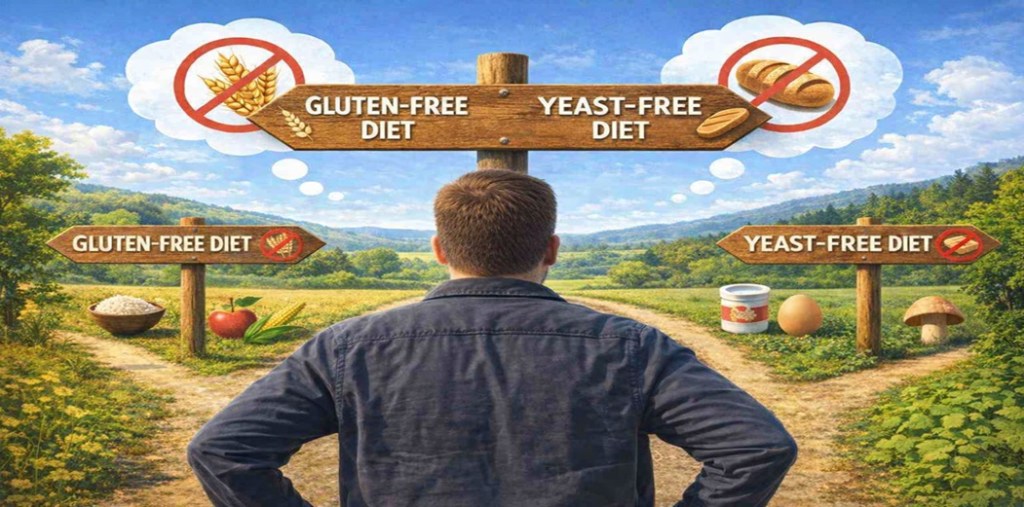
Reflecting on a personal change in diet after a recent allergy test to tackle a food intolerance.
For the last 10 years, I’ve lived with IBS. It can be uncomfortable and unpleasant but manageable by consuming a controlled diet. For a long time, I was convinced the trigger was gluten, commonly found in bread and other baked goods. Over the last decade I had become competent in managing to adapt my culinary skills to remove gluten and wheat from my diet, using a variety of gluten free alternatives to supplement traditional ingredients. But I never really cracked what was causing the issue or got to its root cause, and something has continued to trigger that reaction. I’ve been for blood and other tests in the last year or two to see if it was something more sinister but when they came back negative, all I could do was persevere and monitor what I ate.
My journey really began a decade ago in New York City, during a visit to Katz Delicatessen in Lower Manhattan. After queueing for what felt like an essential rite of passage and tucking into one of their famous deli sandwiches, a sudden, uncomfortable churn in my gut sent me spiralling into panic. With no real sense of the city’s geography, I jumped on an express train heading back to my hotel north of Central Park, clinging to the hope that I’d make it without incident. That turbulent ride on the metro became a formative moment – the point at which I started to question what I was eating and when. Gluten seemed like the obvious culprit, especially with a possible family link, so after that trip I cut it out entirely and embraced wheat‑free alternatives. But even then, the symptoms never fully settled. It wasn’t until recently, encouraged by Anna, that I explored a different avenue: the York Blood Test, a kit designed to identify reactions to specific food groups and finally shed light on what might really be triggering my symptoms.
It didn’t promise to eliminate my symptoms, but it did offer something I’d been chasing for years: a way to narrow down the possible triggers. And when the results arrived, they revealed one surprise omission and an unexpected frontrunner. Wheat – and by extension gluten – showed no reaction at all. Instead, the most reactive ingredient was yeast. As a rising agent, yeast appears in countless breads and cakes, but it also hides in a huge range of products that rely on yeast extract for their rich, savoury flavour. I’d spent more than a decade avoiding traditional baked goods, unaware that many gluten‑free alternatives still contained yeast and could have been provoking my symptoms all along. As I started digging into other foods where yeast appears, I finally found some long‑awaited answers – along with a whole new set of questions about what a yeast‑free diet might actually look like.
It was a relief to finally have some clarity. Living with an unanswered question for ten years had created a constant undercurrent of anxiety in my everyday life – the kind that quietly amplifies symptoms and makes each flare‑up feel heavier than it should. This new information might not be a definitive cure, but it offered a fresh direction, a tangible next step in easing the worst of this condition. It also meant going back to basics in the kitchen, rethinking what I could cook and enjoy almost from scratch. My first steps into a yeast‑free diet were unexpectedly bittersweet: some treats I’d long written off – like a proper sausage roll, a small but cherished British comfort – were suddenly back on the menu. But the flip side was sobering. The sheer volume of foods containing yeast or yeast extract was overwhelming. Cooking sauces, crisps, savoury snacks, anything baked or enriched with that familiar savoury depth – all seemingly off‑limits.
It was both illuminating and disheartening, a mix of regained possibilities and newly revealed limitations. This first week has been a cautious experiment in creating safe, yeast‑free recipes while also going through the inevitable “detox” period – a month or so of letting my system clear itself out. Alongside that, I made another deliberate change: cutting back on soda and carbonated drinks to ease that familiar feeling of bloat after meals. Given how closely anxiety and IBS have intertwined over the years, it felt like a sensible step toward reducing the background noise my body has been carrying for too long. Two bold choices in quick succession – small on the surface, but significant in the context of a decade spent navigating this condition. They might change nothing, or they might finally address something that has cast a long shadow over my daily life.
On a side note, I’ve also felt a flicker of shame for not being more proactive sooner – for defaulting to that familiar, quietly stubborn instinct to just “live with it” and hope for the best. Looking back, I realise the burden that placed on others as much as on myself, all built on a premise that felt logical at the time but may have been incomplete. For that, I can only apologise. And I’m open to the idea that this story might not be purely physical. If we’re being honest, there’s every chance that part of this is neurological – my body reacting to anxiety, primed by years of discomfort, slipping too easily into fight‑or‑flight. If dietary changes don’t bring the clarity I’m hoping for, then perhaps the next step is exploring the emotional and psychological side of this condition. Therapy might hold answers to a question that has followed me for far too long.

That was the past, and now I’m trying to look toward the future with a new direction and a clearer sense of purpose. The goal is simple enough: relearn the basics of cooking, remove the ingredient my body clearly doesn’t tolerate, and see whether that shift makes a meaningful difference. Anna – my natural Tigger in life – is wonderfully optimistic about it all, while I’m approaching things with a more measured, cautious outlook. It will take time to “weed” the yeast out of my system, and I need to remind myself that even in a week or two, a stray ingredient could still be lingering and trigger another episode. But I’ve built enough discipline around what I eat to hope for some improvement as we move into the summer. And if I’m honest, my quiet dream is to go out for dinner with Anna – something so simple, something she’d love, yet something I’ve always been incredibly nervous about because of the anxiety that shadows it. Sounds ridiculous on paper, but that’s the reality of living with this for so long.
My friends, my family, my loved ones have always been incredibly supportive – seeking out gluten‑free bakeries, food festivals, and alternatives so I never felt left behind. Part of me feels a lingering shame that I might have been a burden all these years, especially if the premise I was working from wasn’t quite right. But alongside that is a quiet confidence, a sense of achievement that I’m finally taking a small but meaningful step down a different path in search of clarity. It won’t be easy; there will be mistakes, moments of doubt, and a real sense of loss for the things I’ll have to give up. But there’s also joy in rediscovering what I can enjoy again. A proper sausage roll with flaky pastry is suddenly back on the horizon – and even the possibility of good sourdough. For the first time in a long while, I feel a sense of hope that I might finally be heading in the right direction. And the funny thing is, that feeling – that tiny spark of optimism – might be enough to quiet some of the anxiety and despair that’s lived inside me for far too long.
As I step into this next culinary chapter, I’m trying to hold onto that sense of hope – not as a guarantee (there are few of those in life), but as a companion. I don’t know exactly where this path will lead or how much of a difference these changes will make, but for the first time in years I feel as though I’m moving with purpose rather than fear. Moving towards that first carefree dinner with Anna. There will be setbacks, slip‑ups, and days when old anxieties try to reclaim their space, but there will also be small victories, new routines, and moments of quiet reassurance. If nothing else, this process has reminded me that I’m not facing it alone, and that taking even one deliberate step forward is better than standing still. Maybe that’s all progress really is – choosing, again and again, to believe things can get better, and giving yourself the chance to prove it.
Thank you so much for reading.


 Brown Sign Chronicles
Leave a comment