Crossing the border into Wales and going on a Brown Sign Adventure visiting an empty train station, abbey ruins and enjoying a spectacular lake side view
We crossed the border in March into Wales, spending a week together resting in a wonderfully peaceful environment away from the world of banking and law. There were no set plans, just a week in a cottage with a cosy fire, beautiful views and no decisions to make. With two days of nice weather, we decided to be carefree and to go on a Brown Sign Adventure, exploring some of Wales hidden treasures away from its famous castles and landmarks. In the spirit of our favourite tradition, we set a starting point at Cymer Abbey before gradually heading back to our cottage, finding two or three fun activities along the way. This corner of Wales was still in its pre‑Easter hush, unusually still and wonderfully empty, the perfect setting for pottering between hidden treasures: an abandoned train station, the ruins of an abbey, and a spectacular lakeside view that felt like a reward for choosing the unplanned path.
Anna and I both love these kinds of adventures, the chance to slow down, step away from the rush of popular attractions, and wander toward places that feel tucked out of sight. We’ve discovered a local gaol and a railway carriage museum on our travels packed full of character. As ever, a helpful brown sign guided us toward the abbey. Wales is full of castle and abbey ruins, each with its own stories and potential for exploration, but there was no grand decision behind choosing this one. It was simple curiosity, the purest form of Brown Sign adventuring. We pulled into the small car park, laced up our boots, and set off on foot, ready to see what this hidden treasure might reveal. It felt a little desolate, with not a soul in sight but the best adventures come from exploring these ruins on our own.
A ruinous experience
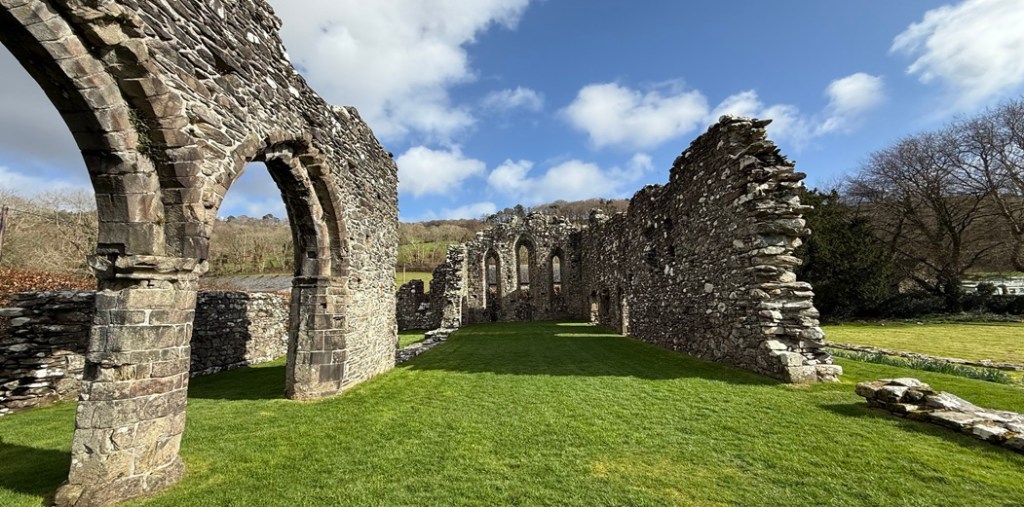
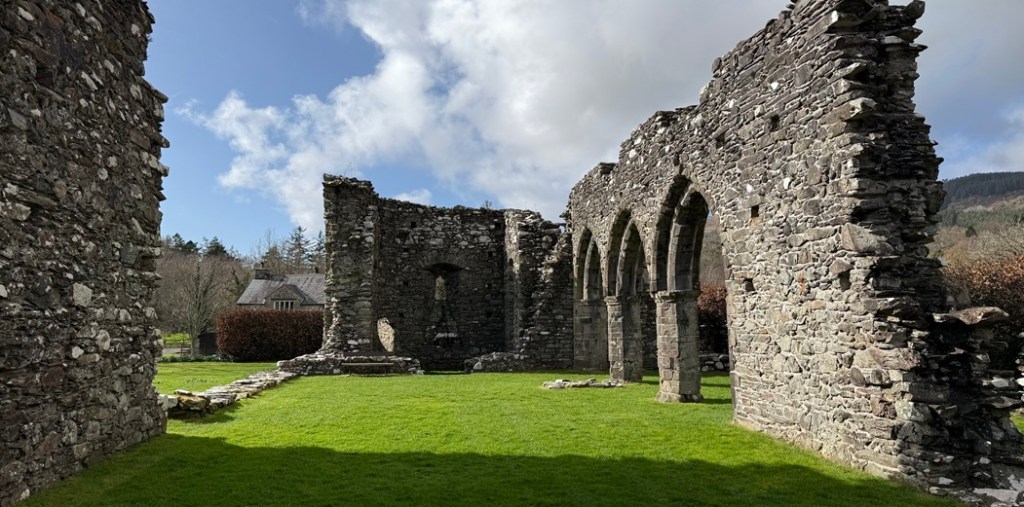
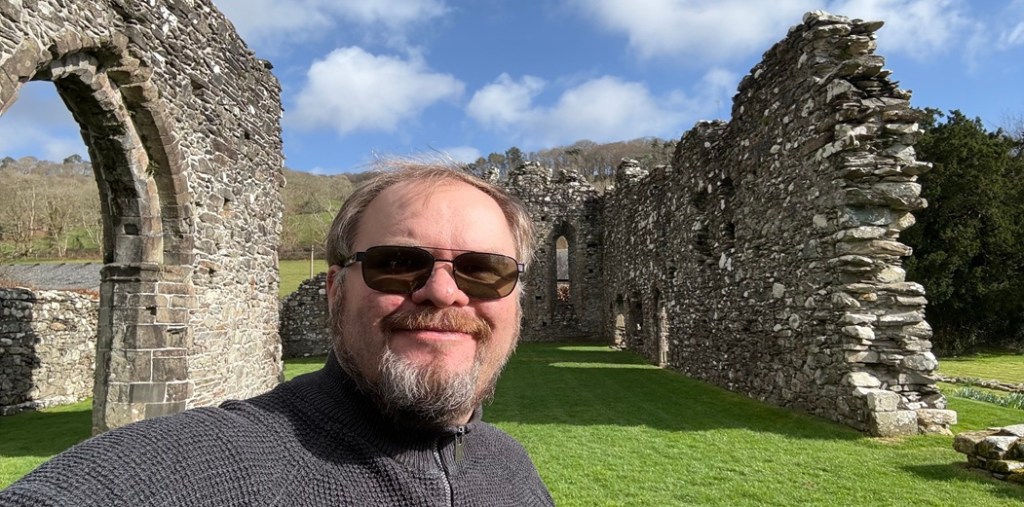
Hidden away down a narrow country lane, we pulled into a small car park and immediately found the abbey ruins lying quietly in the field beside us. Last year we visited Rievaulx Abbey in the Yorkshire Dales, a vast, soaring structure with a serene, almost monastic stillness, and although this abbey was far smaller, it carried a similar sense of peace. It was free and open to explore through a simple wooden gate, offering long views across what remains of the interior, all set within an impossibly tranquil landscape. A couple of twisty staircases invite you to climb them, though they lead nowhere now, leaving you – as so many ruins do – to imagine what once stood here a thousand years ago. It’s a quiet testament to the Cistercian influence in Wales, a place left to crumble yet still substantial enough to stir the imagination.
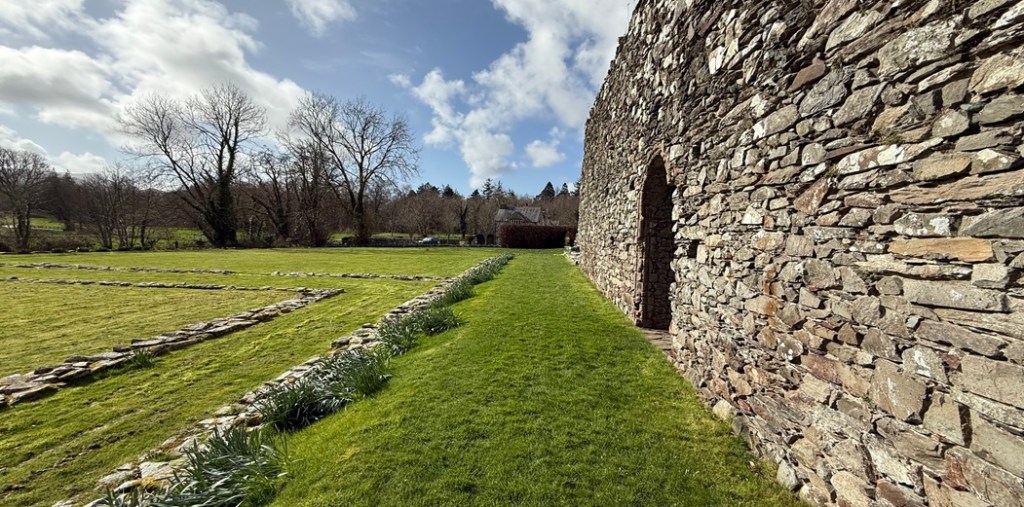
Wandering through what remains, you feel the weight of time without any need for interpretation boards or guided routes. Just space, stone, and the gentle invitation to picture the lives that once filled it. Outside the main abbey ruins there are stone foundations in the landscape suggestive of an expansion of the original building but nothing else remains of that part of the abbey. Directly opposite, there was a caravan park, visible through the trees, it left us to contemplate who takes the time to explore these beautiful forgotten ruins when it was entirely empty apart from two intrepid explorers from London. From there, we followed the winding country roads deeper into the valley, letting the landscape decide our next stop. A few miles on, another brown sign pointed us toward something rather different from ancient stone and monastic calm: a heritage train station tucked away at the edge of a village.
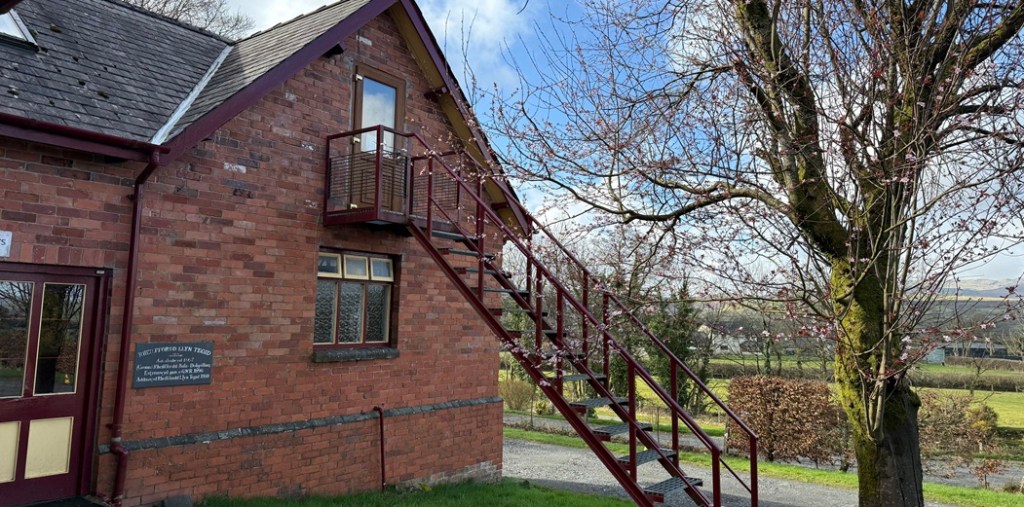
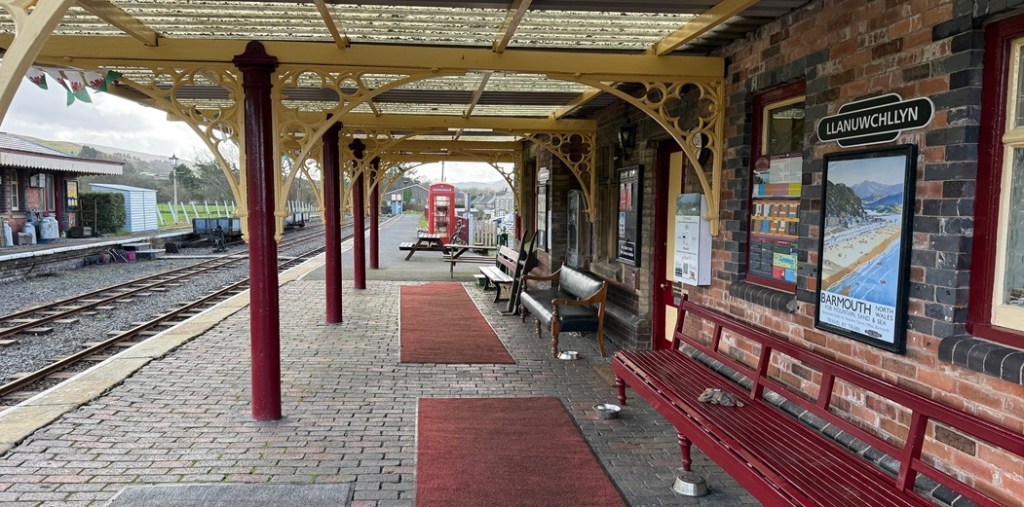
On our journey back, we spotted another brown sign pointing toward the Bala Lake Railway and, true to form, changed course without a second thought. We pulled into the small station car park only to find it closed for the season, our hopes of visiting the signal box or heritage centre postponed for another time. Still, it offered its own unexpected pleasure. With no staff, no visitors, and no trains running, we were free to step out and wander along the empty platform. In the modern world of electrified railways – especially in London, where every inch of track is sealed off behind barriers and warning signs – the idea of quietly exploring a station outside operating hours feels almost impossible. Here, though, it felt strangely permissible, even a little clandestine. No smoke, no whistles, no bustle of passengers; just the quiet presence of a historic station waiting for its next season.
There was something oddly magical about it, as if we’d stumbled into a moment paused in time. I’ve often thought about urban explorers – people who seek out abandoned buildings slowly being reclaimed by nature – and standing on that empty platform brought a faint echo of that feeling. I’ve walked stretches of the Thames and found old military pillboxes half‑hidden in the undergrowth, and followed disused railway paths where rusted track still lies embedded in the ground. Even our earlier wander through the abbey ruins carried that same quiet resonance: remnants of civilisation left behind, waiting for imagination to fill the gaps. Here, on a station platform with its 1940s aesthetic and complete absence of movement, that sensation returned. For a fleeting moment, it felt like discovering an abandoned railway station – no trains, no smoke, no whistles, just the stillness of a place built for motion now resting in silence. It was only a passing thought, but one I carried with me as we continued our journey.
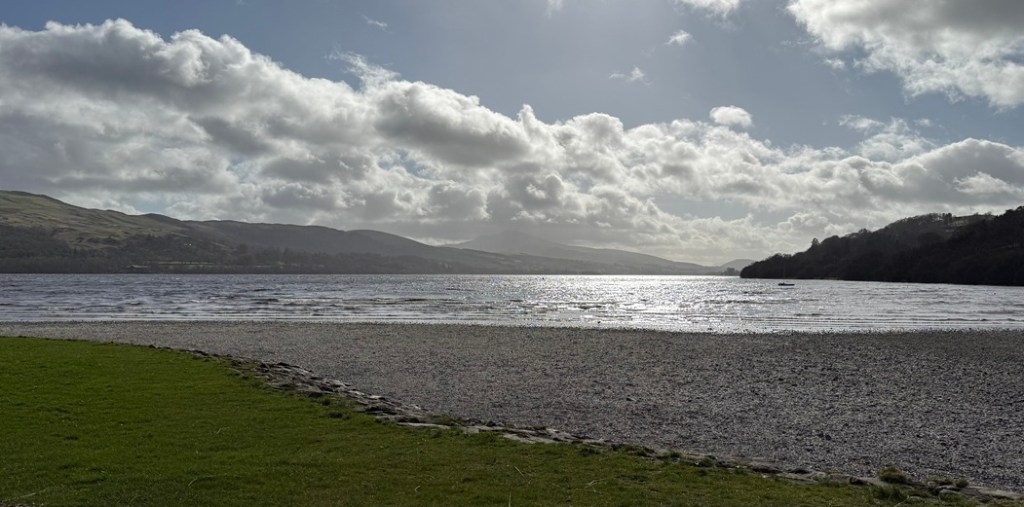
View by the lake
From there, the road home wound alongside Lake Bala, offering sweeping views of the water as the late afternoon light settled across its surface. It was the perfect final note to a day shaped by quiet discoveries. The road promised a couple of places to stop to take a picture, eventually a Brown Sign pointed to a car park and we pulled over to get some photos of the lake. Anna was feeling a little cold, I was feeling a little intrepid and so I parked up, took my camera and headed down some precarious steps to the waters edge, enjoying the slightly tempestuous waves rolling across the waters surface. I didn’t stay too long but managed to capture some images on my camera. Climbing back into a car with heated seats was a blessing after standing outside for five minutes.
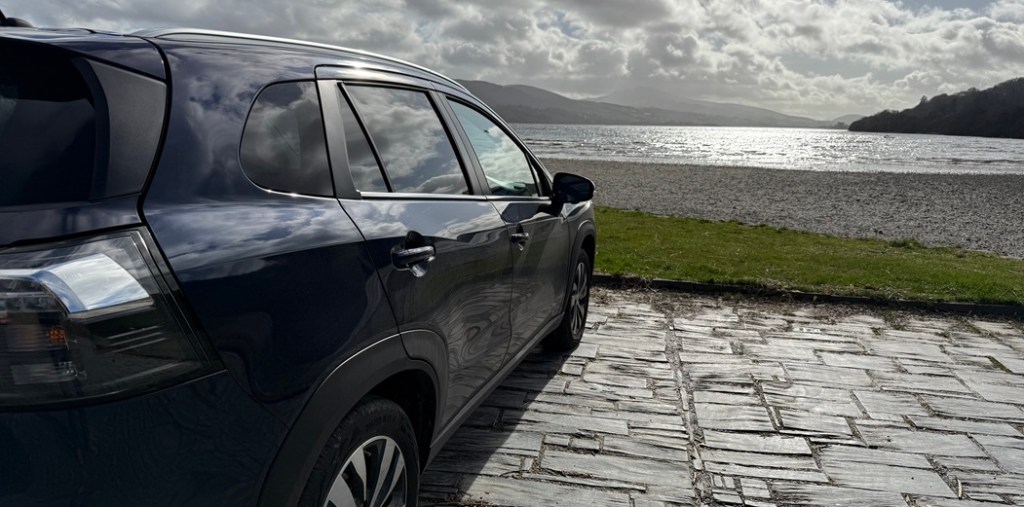
Heading toward the town centre, another stopping point presented itself – this one a little more sheltered from the wind. We pulled in to take another photo together and to enjoy the view across the lake. In summer, I imagine it would be a busy spot, full of families and walkers, but on this cold March afternoon the car park was almost entirely empty. Aside from a hopelessly optimistic ice‑cream van braving single‑digit temperatures, we had the place to ourselves. It felt perfectly in keeping with the spirit of our Brown Sign Adventure: quiet, unhurried, and wonderfully peaceful. A pang of hunger eventually nudged us back into the town, where we found the only butcher still open, offering deli meats and a few simple treats. We gathered a small picnic and took it back to the cottage to enjoy after a day of gentle exploration.
Final Thoughts
It was, in many ways, our most desolate adventure to date – empty stations, empty car parks, empty landscapes – yet it suited the intention of our Welsh escape perfectly. A day shaped not by crowds or spectacle, but by stillness, curiosity, and the quiet pleasure of discovering places that feel entirely your own. I don’t mind a little social interaction; some of our best experiences have come from small museums and volunteer‑run attractions. But there was something evocative about exploring these empty ruins and buildings, as if we’d been given a brief glimpse into forgotten corners of the world. It was, perhaps, the most comfortable and safest form of “urban exploring” imaginable – undertaken from the warmth of our own car, with a few choice cuts of deli meat waiting for us back at the cottage – but that has always been the intention of these endeavours.
To find places and experiences that sit just off the beaten path – a little different, a little unexpected, yet every bit as engaging – has always been the quiet intention behind our Brown Sign Adventures. And on that front, this Welsh escape delivered exactly what we hoped for. Yes, it would have been enjoyable to ride a heritage line through the hills, but how often do you get to explore a heritage station entirely on your own? How often do you wander through abbey ruins with no one else in sight? We hadn’t set out to spend the day in near‑silence, keeping company only with each other, but in the end it was exactly what we both needed. Our next Brown Sign experience would take us north to the remains of Conwy Castle on the coast — a very different kind of adventure, full of stone walls, sea air, and a little more bustle. But for now, this particular journey draws to a close. Quiet, desolate in places, unexpectedly restorative, and one that left a gentle impression on us both.
Thank you for reading.
 Brown Sign Chronicles
Leave a comment