
A reflective look back at steam railways in the UK and plans for the year ahead to experience more heritage lines around London and further afield.
My earliest childhood holiday memories are of travelling up to Yorkshire and riding the North York Moors Railway with my family. I still remember standing on the platform beside those giant machines, soot in my hair and a smile on my face – I couldn’t have been happier. Ever since, whenever the opportunity arises, I have loved travelling on these trains to recapture that spirit of childhood wonder. In the 1960s, following the Beeching Report, many railway lines were closed and dismantled, no longer profitable in an age of automobiles. Society embraced the freedom and immediacy of cars, and motorways replaced much of the country’s rail infrastructure.
Many of the old lines now lie buried beneath development, or survive as faint scars on the landscape, repurposed as walking paths to explore by foot. Yet time has a way of reshaping our perspective: what was once considered old-fashioned has now become a more sustainable and enjoyable form of transport. A handful of restored steam lines, often using original rolling stock along rebuilt sections of their original routes, preserve the memory of Britain’s railway heritage, offering a delightfully immersive experience that continues to charm all who ride them.
As a small boy, my imagination brought entire worlds to life around me. My father fostered an appreciation for the model railway, and I loved sitting at the controls of my N Gauge set, moving trains around and watching my miniature interpretation of the railways come alive. Some kids enjoyed sports, I loved staying indoors playing with my trains. My interest waned in my teenage years, models and scenery giving way to the temptation of bright lights and video games. But in recent years, perhaps driven by age and nostalgia, I have found myself looking back and appreciating the sheer, simple joy that steam trains once brought me.
Today, standing on a platform edge on a clear, warm day, watching a steam train chuff into view, I feel that twinge of childhood joy once again. There is no rush, no drive to reach a destination, just a quiet appreciation for a different era. The smells and sounds are instantly recognisable, a sensory time machine to my younger self. Inefficient perhaps, lacking the speed and precision of the Japanese Bullet Train or the TGV through France, yet imbued with a grandeur and elegance that modern rail cannot match. I’ll openly concede my admiration is fuelled by nostalgia, but there are worse things to be inspired by.
Last year, inspired by this enduring fascination, we embarked on four wonderfully contrasting railway adventures. Our two-week ‘Grand Tour’ carried us through Paris, Tuscany, and down to the Amalfi Coast on the Italian railways, following in the footsteps of Victorian travellers. Closer to home, a traditional Brown Sign Adventure led us to an old signal box in Romsey near the New Forest; we also rode the Watercress Line in Hampshire during the summer before celebrating Anna’s birthday on the North York Moors Railway. Each journey offered a glimpse of the past and present coming together, creating a vision of transport delightfully different from the car.
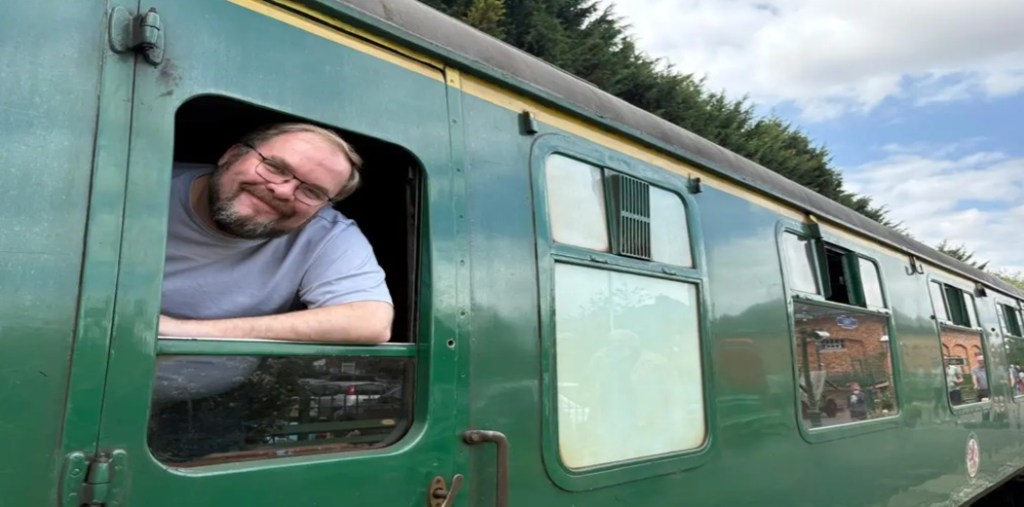
Travelling through Europe was certainly an adventure, but stepping into one of the old wooden carriages, opening the window, and inhaling the smell of smoke and soot as the train puffed through the countryside brought a uniquely whimsical nostalgia. Most restored heritage lines are only a few miles long, but they are designed entirely to provide an experience rather than simply transport from one destination to another, and for that nostalgic joy, they deliver in abundance. Looking ahead, our challenge for 2026 is to venture further into the English countryside and explore even more of the enduring charm of steam travel in the modern day.

Railway plans for the year ahead
Heritage lines in the UK typically operate from spring through to autumn, making the most of longer days and warmer weather to run a mixture of diesel and steam locomotives. Services are often limited to weekends during term time before expanding throughout the summer holidays. June to August offer the most reliable conditions, though a clear day in April or May can provide a quieter, equally rewarding experience before peak crowds arrive.
This year, I have four lines firmly in my sights:
- The Bluebell Railway
- The Kent and East Sussex Railway
- The Chinnor and Princes Risborough Railway
- The Cholsey and Wallingford Railway
Each lies roughly an hour from London – two to the west of the capital, one in Kent, and another stretching towards the South Coast. All offer the chance to ride behind a steam locomotive and indulge that familiar sense of nostalgia. One of the true pleasures of these day trips is their spontaneity: waking to a bright morning sky and deciding, almost on impulse, to step back in time. While the experience on each line may be broadly similar, what distinguishes them is often the people. The volunteers who operate these railways bring a quiet passion to their work, preserving not only the machinery but the atmosphere of another era. Their enthusiasm is infectious, and it is through them that the past feels most vividly alive.
The Bluebell Railway
The Bluebell Railway runs for 11 miles between Sheffield Park and East Grinstead, tracing part of the former Lewes and East Grinstead line. Opened in 1960, it proudly holds the distinction of being the first standard-gauge preserved heritage railway in the UK. A visit offers the chance to explore four distinct stations, each carefully restored and styled to reflect different periods of railway history. From enamel signs to period lamp posts, the attention to detail creates the sense of stepping not just onto a train, but into another era. It may not carry the scale or sweeping moorland drama of the North York Moors Railway, yet it was first on my list this year. Eleven miles is a respectable run for a preserved line, long enough to feel less like a novelty and more like a genuine railway journey, unfolding through a particularly beautiful corner of England.
Kent and East Sussex Railway
The Kent and East Sussex Railway runs for around 10½ miles between Tenterden Town in the north and Bodiam in the south, making it the second longest journey on this year’s railway calendar. Originally opened in 1900 as Britain’s first Light Railway, it occupies a distinctive place in the country’s railway history and celebrated 50 years of preservation in 2024. Today, visitors can travel behind steam or diesel locomotives through the gentle landscapes of the Rother Valley, a designated Area of Outstanding Natural Beauty. The line has a quieter, more rural charm, less about grand engineering statements and more about unhurried immersion in the countryside. As our second railway on this side of London, it reinforces just how many of these remarkable preserved lines lie within easy reach of the capital. There is something quietly reassuring about knowing that, little more than an hour away, another chapter of railway history is waiting to be experienced.
The Chinnor and Princes Risborough Railway
The Chinnor & Princes Risborough Railway runs for 4 miles along a former branch of the Great Western Railway. After the Epping & Ongar Railway, it is one of the shorter preserved lines, beginning at the heritage station in Chinnor before winding gently through the Chilterns and arriving at Princes Risborough, where it connects with the mainline. Opened in the 1870s and closed to passengers in 1957, the line has been lovingly restored as a charming example of steam heritage in the region. Its compact length makes it an ideal, unhurried day out, and its peaceful setting has made it a popular filming location over the years. With several local attractions nearby and a quiet village atmosphere, it offers a wonderfully relaxed way to experience the nostalgia of steam travel close to London.
The Cholsey and Wallingford Railway
The Cholsey & Wallingford Railway runs for 2½ miles through the South Oxfordshire countryside, linking the two market towns along what was once a quiet rural branch of the Great Western Railway. Originally conceived in the 1860s as the Wallingford–Watlington Railway, the line closed to passengers in 1958 as travel patterns changed and demand declined. A new station was built at Cholsey in 1892 when the branch converted to standard gauge, and it is along this short stretch that today’s heritage services operate. Though modest in length, the line offers a charming opportunity to ride behind a steam locomotive and enjoy a gentle journey through a peaceful corner of Oxfordshire. Its simplicity is part of its appeal: a short, nostalgic trip that captures the essence of rural branch‑line travel from another era.
Closing Thoughts
Four heritage lines, each with their own character and charm, scattered across the South East of England. Different lengths, different landscapes, yet all offering that familiar, comforting experience of steam travel through beautiful countryside. It’s a gentle kind of adventure – unhurried, nostalgic, and wonderfully evocative of childhood memories that never quite fade. Very few heritage railways in the UK have been fully restored; most preserve only a handful of stations and a short stretch of track, often no more than ten miles. They survive through the dedication of volunteers and charitable organisations who work tirelessly to keep these fragments of history alive.
Their efforts mean that even the shortest journeys – like the last two lines on this year’s itinerary that run for only a couple of miles – still offer a meaningful glimpse into the early 20th‑century world of steam. What these railways lack in distance, they make up for in atmosphere. A few miles behind a steam locomotive is enough to conjure the smell of coal, the rhythm of the rails, and the quiet magic of stepping back into another era. And that, ultimately, is what makes these trips so rewarding: not the length of the line, but the feeling it inspires.
With the Easter holidays ushering in a series of family events, many of these heritage lines are now beginning their operating season once again. Over the next six months they’ll alternate between steam and diesel services at weekends, before expanding to weekday timetables during the summer holidays. It’s a familiar rhythm in the heritage‑railway world: quieter spring mornings, long bright days in June and July, and the soft glow of late‑summer evenings as the season draws on. With no grand holidays planned this year, we’re turning our attention to smaller adventures – the kind that fit neatly into a free Saturday morning or a spontaneous sunny afternoon. A day on the railways feels like the perfect ambition: simple, nostalgic, and wonderfully restorative. As a small challenge to ourselves, we’re hoping to ride more heritage lines this year than we’ve ever managed before. It feels like a fittingly “comfortably adventurous” goal for the months ahead.
Thank you for reading.

 Brown Sign Chronicles
Leave a comment